
Yes. Robot vacuum mops do a good job of routine light mopping on sealed hard floors, but they don’t replace a hand mop for dried-on or sticky messes. In Consumer Reports’ 2023 robotic-mop test, dried espresso and V8 juice were left on tile and vinyl, and CR said “the best robomops tackle the stains and leave a clean floor behind.” TechRadar’s Ruth Hamilton calls robot mopping “a significant effort-saver.”
The limits are real. Hamilton says a typical robot mop “won’t scrub hard enough” to clear a dried-on stain and can spread a big spill around. Tom’s Guide’s reviewer says robot mops aren’t very good with “larger spills or very sticky messes,” and The Verge’s Jennifer Pattison Tuohy writes that they “still don’t clean as well” as mopping yourself. How well one works depends on the mop type, the model and how often it runs.
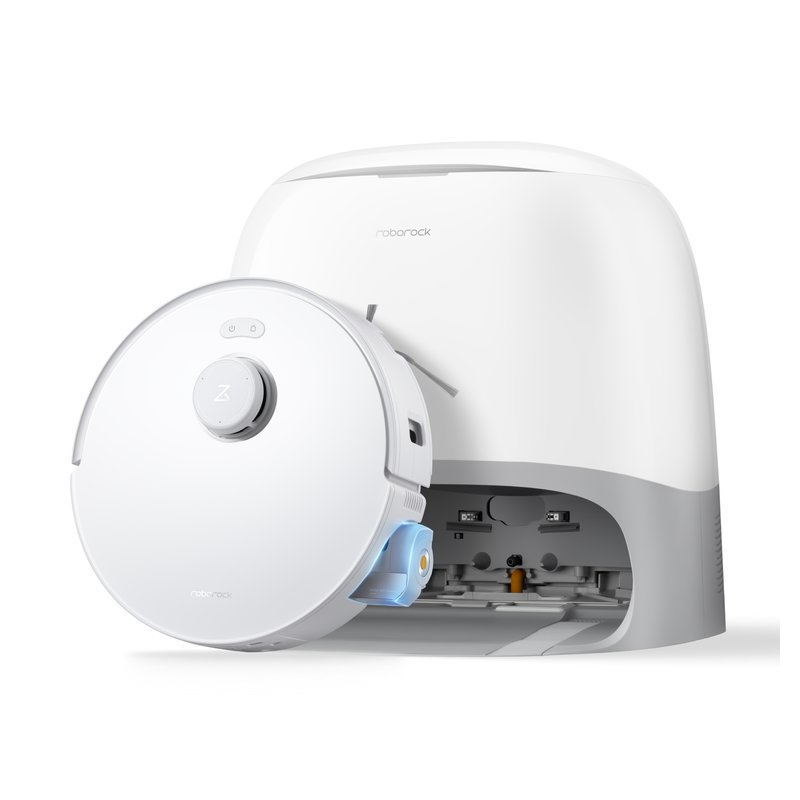
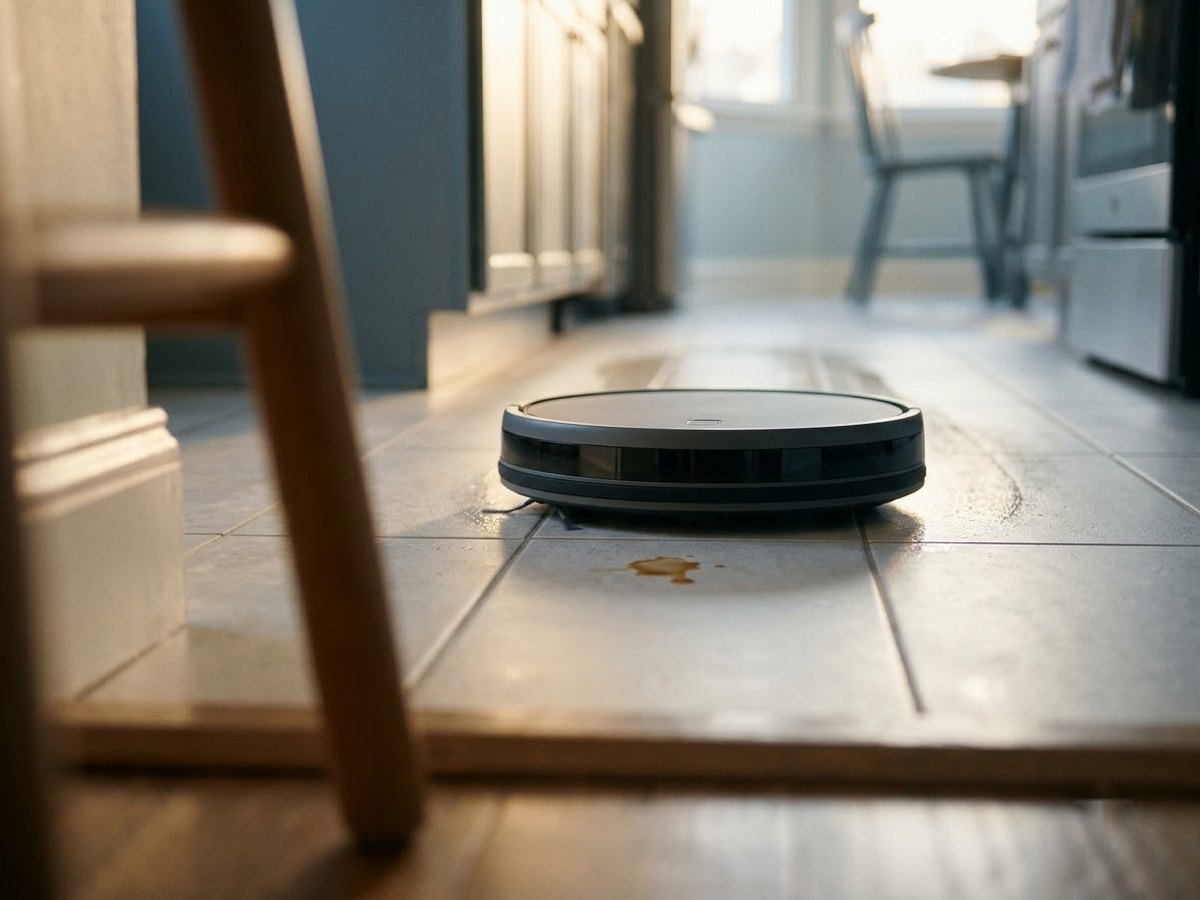
What did independent stain tests find?
Several reviewers have let real food and drink stains dry on hard floors, then run a robot mop over them. The results line up well: light and recent stains come up, while thick, sticky ones often need a second pass.
| Tester | What they spilled | What happened |
|---|---|---|
| Consumer Reports (2023) | Espresso and V8 juice, dried on ceramic tile and vinyl | The best models left a clean floor; spinning mop heads performed best; runs took 50 to 100 minutes |
| Gizmodo (Roborock Qrevo Curv 2 Flow) | BBQ sauce, milk, mayo and jerk sauce, dried for two hours | All the mayo and milk came up on the first pass; BBQ sauce needed a second pass and still wasn’t fully gone |
| House Digest (Dreame Aqua10 Ultra Roller) | Ketchup left about two hours; dried baking powder | Ketchup gone on the first run; baking powder about 70% gone after one run, fully gone after a second run on intense pressure |
| Vacuum Wars (2024) | Nine dried coffee and grape-juice stains, four runs, cold water, no solution | Spinning-pad systems generally removed stains better; the eufy Omni S1 Pro’s roller was an exceptionally effective exception |
Vacuum Wars also reports that some top robot mops outperformed leading upright cordless wet-dry vacuum mops in its stain test. That is a strong result for a machine that cleans while you’re out of the room.
Gizmodo’s test shows the other side. The sauce that resisted the mop also hardened on the robot’s side brushes, which had to be cleaned by hand. A robot mop can handle a dried stain, but sticky food asks more of both the robot and you.
Where do robot mops fall short?
The same reviewers who praise robot mops are clear about what they can’t do. These are the gaps that come up most often:
- Dried-on and sticky messes. TechRadar’s reviewer says a typical robot mop “won’t scrub hard enough,” and Tom’s Guide says stuck-on mess still needs spot cleaning.
- Big spills. Hamilton says she wouldn’t leave a bot to deal with a big spill, because it can spread the liquid across the floor.
- Edges and corners. Reviewers disagree here. Tom’s Guide reviewer Christian de Looper says robot mops are “more precise, ensuring they get the whole floor, even the corners.” Gizmodo found one roller mop left gaps of up to 8 inches along some walls, and The Verge says roller mops largely miss corners and baseboards. Results depend on the mop type and model.
- Carpet. Consumer Reports says robotic mops are “designed to clean hard-surface floors,” not carpet. TechRadar adds that basic models drag damp pads over rugs unless you remove them.
- Upkeep. The Verge says mopping robots are “far from hands-off” and need even more maintenance than vacuum-only robots.
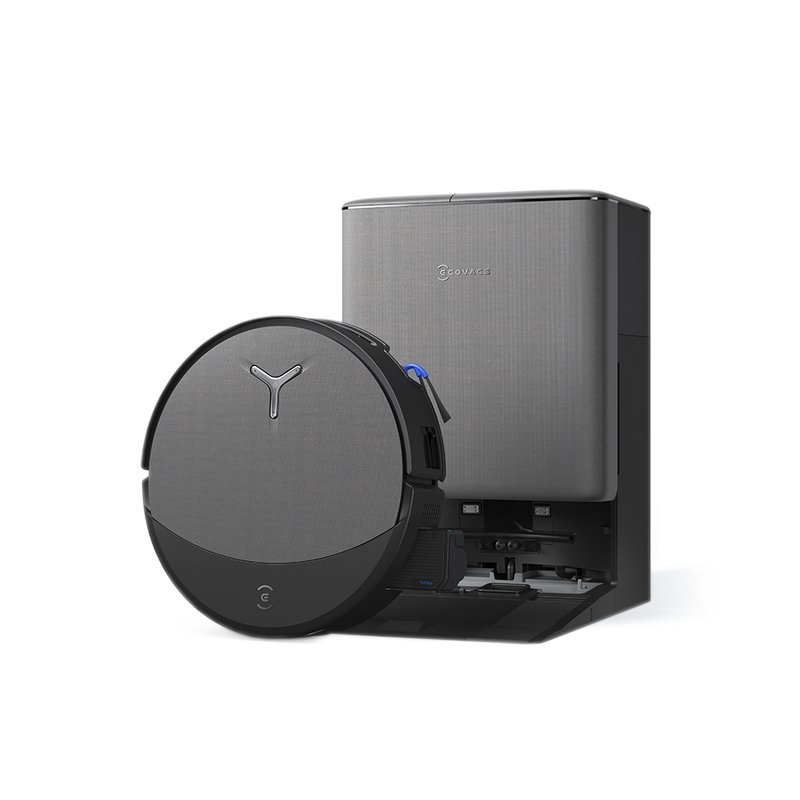
For spill-prone kitchens · Mid-range price range
Ecovacs Deebot T90 Pro Omni
Yahoo Shopping picks the T90 Pro Omni for heavy stains. Ecovacs says its roller lifts 15 mm on carpet and its dock washes the roller at up to 75°C. Vacuum Wars notes a very small 250 ml bin.
See details ›Does the type of mop make a difference?
Yes, and it may matter more than any other spec. TechRadar’s Ruth Hamilton, who has tested many hybrid robots, ranks the mop styles clearly. Single-use wet wipes are “the least effective type of mop.” A D-shaped drag pad is “pretty effective” for wiping but “doesn’t offer much by way of scrubbing.” Dual spinning discs are “probably my favorite mop type” and “a little better at scrubbing.”
| Mop type | What reviewers say | What to watch |
|---|---|---|
| Drag pad | TechRadar: “pretty effective” for wiping, little scrubbing | Budget models often can’t lift it off rugs |
| Vibrating pad | TechRadar: on advanced bots the pad may vibrate or press down to help with dried-on dirt; The Verge: gentler and uses less water | Less contact area than a roller |
| Dual spinning pads | Consumer Reports: spinning heads performed best; Vacuum Wars: generally better on stains | The Verge: faint streaks can appear where the two pads meet |
| Roller | The Verge: covers more area; Gizmodo called one “the most powerful mop I’ve encountered on a robot vac” | The Verge: weaker at edges and corners |
Rollers are the newest style and the most mixed. TechRadar found one roller (the Eureka J20) great on spills but “more of a wiper than a scrubber,” while Gizmodo was impressed by the roller on Roborock’s Qrevo Curv 2 Flow, “but only where it can reach.” If roller designs appeal to you, start with these roller-mop robot vacuums.
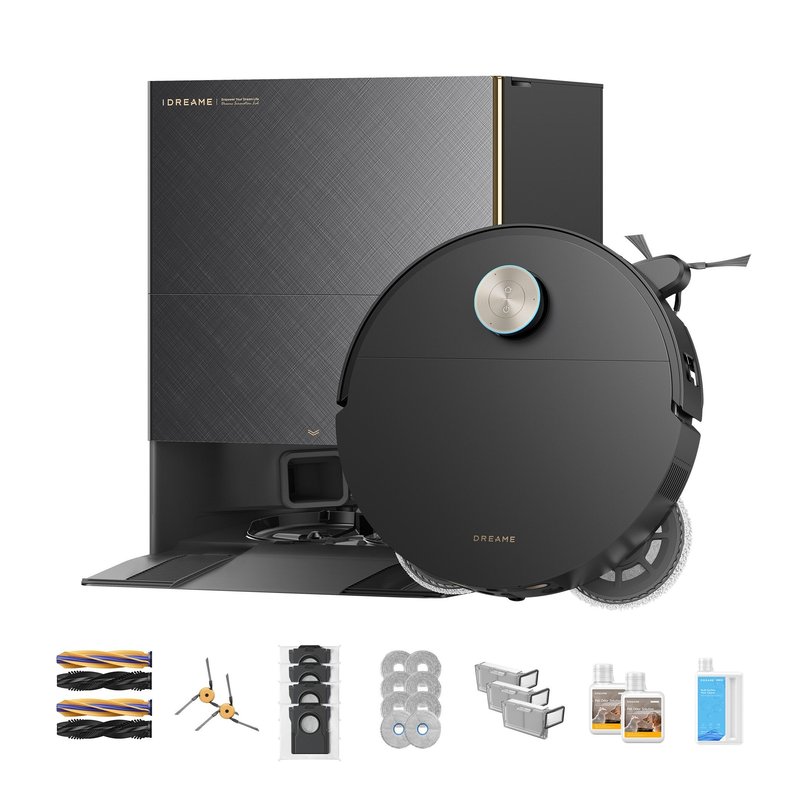
Spinning pads that reach edges · Premium price range
Dreame X60 Max Ultra Complete
Dreame says the X60’s spinning pads extend toward edges and stay in the dock for high-pile carpet. Tom’s Guide names it the best robot vacuum overall, though The Hook Up found it had the hardest time with its mud stain.
See full specs ›How can you get better results from a robot mop?
Most disappointing results trace back to how the robot is set up, not to the robot itself. Brands and reviewers point to the same habits:
- Vacuum before you mop. Tom’s Guide, citing appliance experts, says “excess dust and debris can cause streaking after mopping.” Dreame recommends its Mop After Vac mode for heavily soiled rooms and simultaneous Vac and Mop for lightly soiled rooms you clean often.
- Run it often. Tom’s Guide concludes robot mops are “more suited to everyday dirt, dust and maintenance,” so frequent light runs play to their strengths.
- Wipe big or sticky spills yourself first. TechRadar’s reviewer wouldn’t trust a robot with a large spill.
- Expect a second pass on set-in stains. Both Gizmodo and House Digest needed a second run to finish their toughest stains.
- Use only the brand’s solution. Roborock recommends only its own cleaning solution in the tank and warns that bubbles from other cleaners “may cause the mopping feature to malfunction.”
- Keep pads fresh. Roborock’s S5 Max manual recommends replacing the mop cloth every 3–6 months.
Honest note
A robot mop is a maintenance tool. Most reviewers cited here, from TechRadar to The Verge, still expect you to reach for a real mop now and then. The dock adds its own chores too: TechRadar’s tester notes that grime builds up in the dock base and side sweepers need de-hairing. If your floors mostly see big, sticky spills, a robot mop alone will disappoint you.
Questions people ask
Do robot mops actually clean, or just push dirty water around?
Good ones do clean. Consumer Reports found the best robomops cleared dried espresso and V8 juice and left a clean floor. Some designs keep dirty water apart: Gizmodo reports the Qrevo Curv 2 Flow’s scraper moves dirty water into a separate tank. TechRadar warns that large spills can get spread around, so wipe those up first.
Can a robot mop replace mopping by hand?
Not completely. TechRadar’s Ruth Hamilton says robot mopping is “not good enough that you won’t need to resort to manual cleaning occasionally,” and The Verge says robot vacuum-mops still don’t clean as well as doing it yourself. Most reviewers see them as a way to keep already-clean floors fresh between deeper cleans.
Are spinning pads or roller mops better at stains?
Spinning pads have the edge in most tests. Consumer Reports found spinning mop heads performed best, and Vacuum Wars found spinning-pad systems generally removed stains better. Rollers are catching up: Vacuum Wars singled out the eufy Omni S1 Pro’s roller as an exception, and Gizmodo praised the Qrevo Curv 2 Flow’s roller.
How long does a robot take to mop?
Longer than you might expect. In Consumer Reports’ 2023 test, the mops took 50 to 100 minutes to clean. Mopping also shortens battery runtime: Ecovacs lists its X8 Pro Omni at 228 minutes vacuuming on hard floors but 145 minutes vacuuming and mopping in standard mode.
Do robot mops work on carpet?
No. Consumer Reports says robotic mops are designed for hard-surface floors such as tile, vinyl and some hardwood. TechRadar says mid-range and better robots can often detect carpet and lift their pads, while basic models drag damp pads over rugs unless you remove them first.
Sources: Consumer Reports: Robotic mops (via WAFB) · TechRadar: Can a robot vacuum effectively mop? · Tom’s Guide: Are robot mops worth it? · Gizmodo: Roborock Qrevo Curv 2 Flow review · The Verge: Best robot vacuum mops · Vacuum Wars: Robot mop testing
This article is general information. Specifications and features are each brand’s own; check your floor maker’s care guide before wet-cleaning wood or laminate, and follow the robot’s manual for cleaning solutions and maintenance.